First, Zuss watches.
A phototransistor reads the sky and tracks slow changes in ambient light.
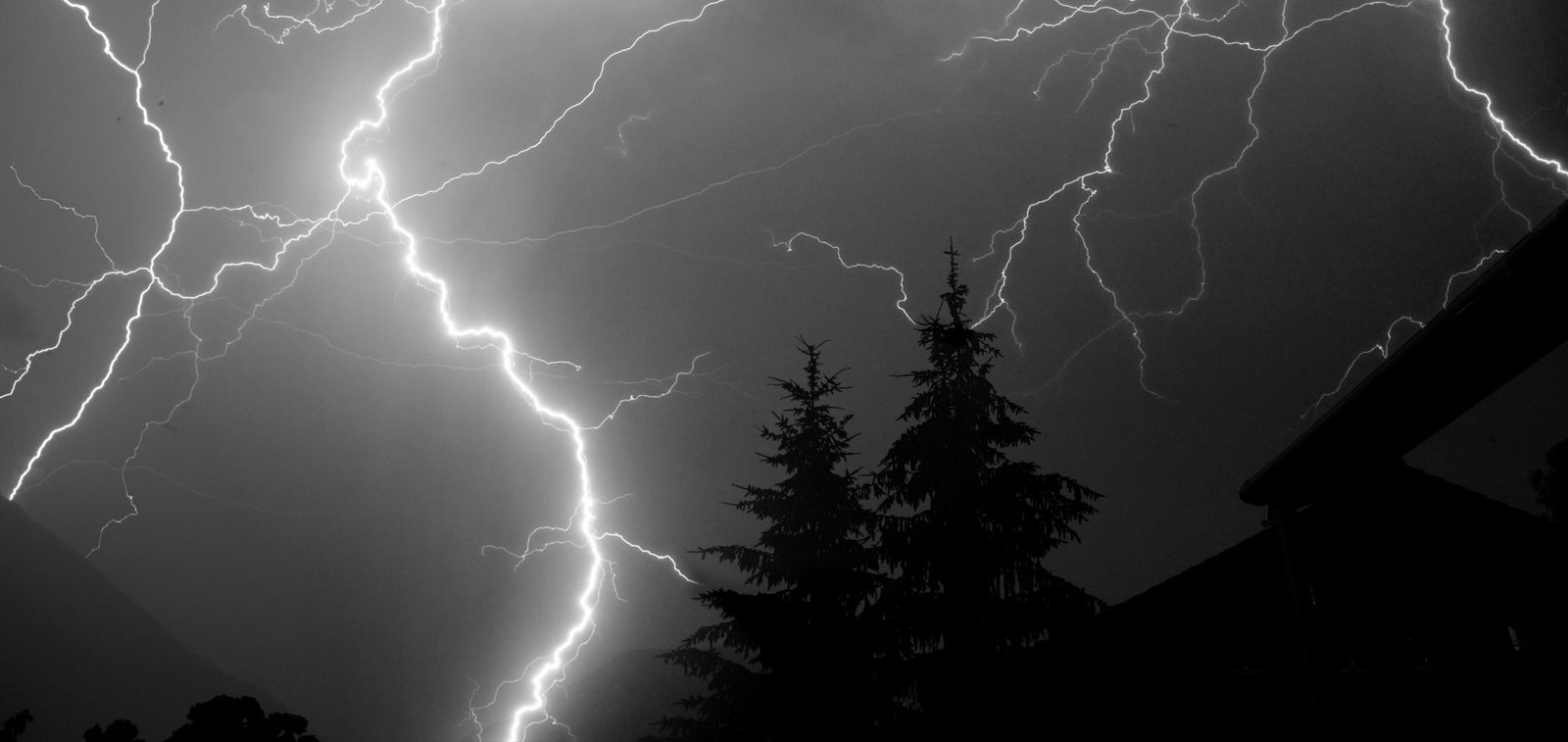
Zuss is a lightning camera trigger for photographers who would rather watch the storm than the shutter.
See how it works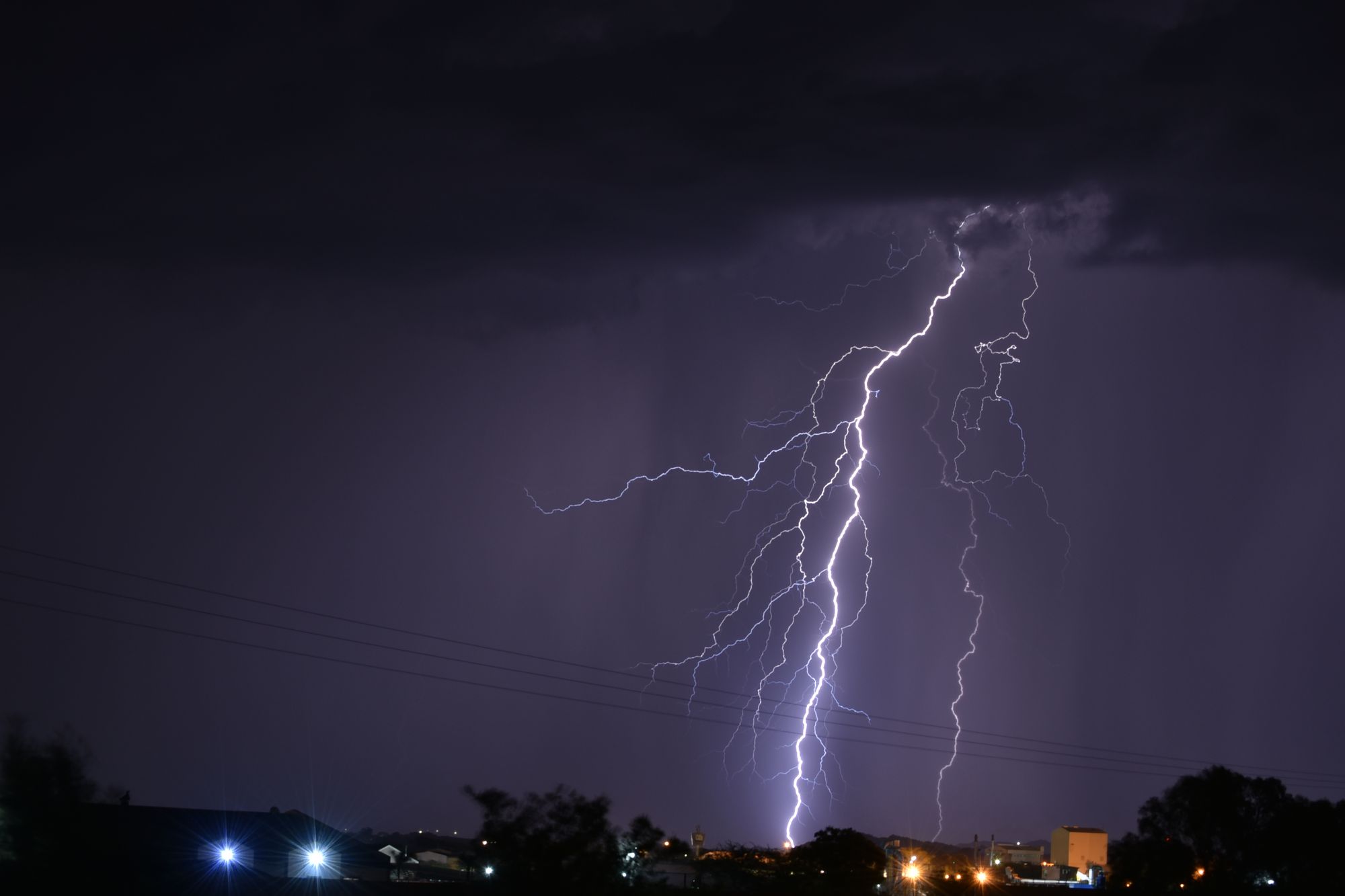
1–99%sensitivity, tuned from your phone
isolated camera lines
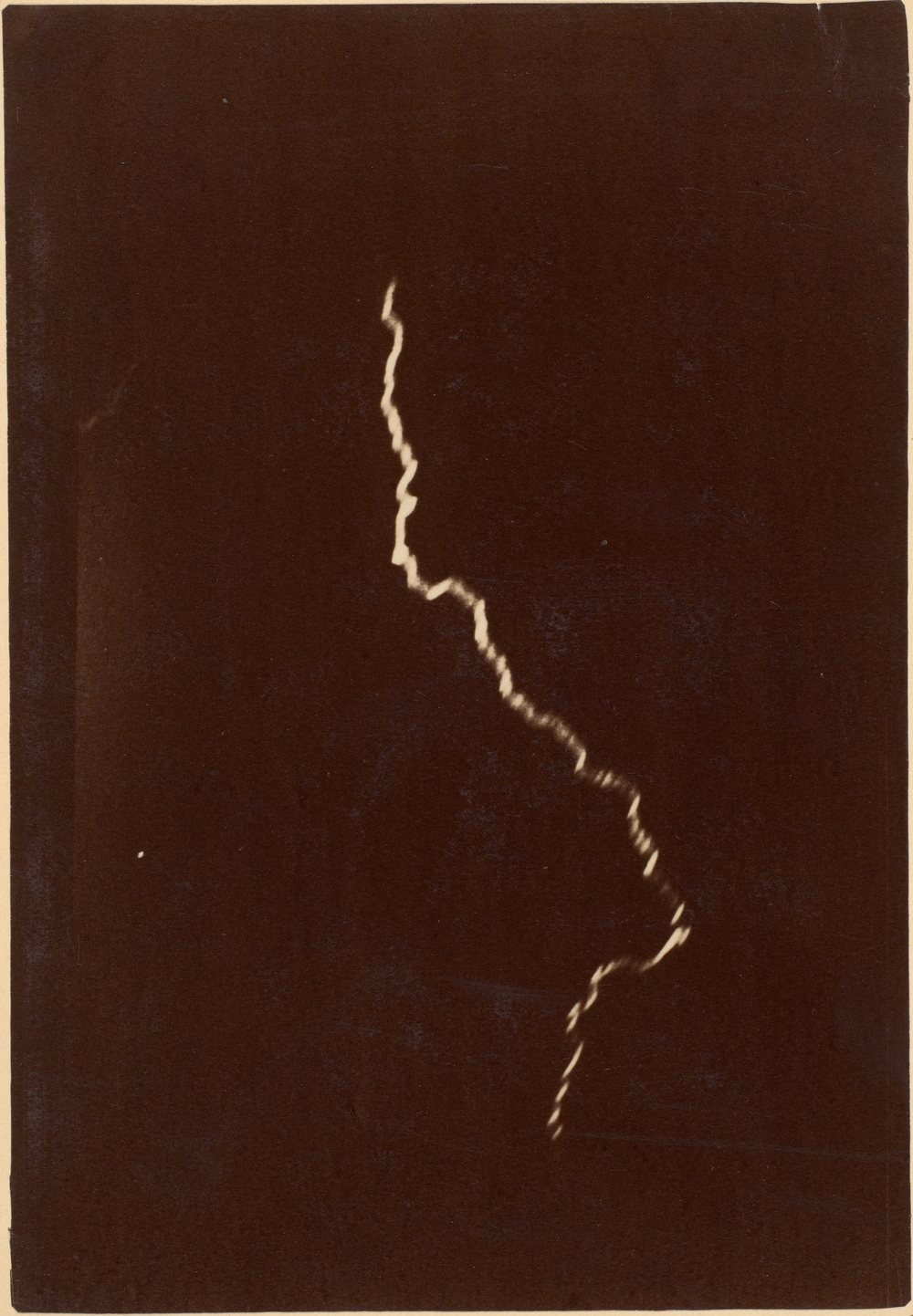
Zuss combines a fast light sensor, an ESP32, an isolated camera cable and a companion app. The sensor watches for a sudden jump, not the slow change from dusk or cloud. When a strike crosses your threshold, the trigger closes the focus and shutter lines. Your camera does the rest. Use its own shutter speed for a single frame, or switch to Bulb for timed exposures, HDR sequences and ramped timelapses. The onboard screen keeps count even when your phone is elsewhere.
A phototransistor reads the sky and tracks slow changes in ambient light.
Set sensitivity from 1–99%. Higher catches faint flashes; lower ignores flicker.
A sudden jump fires two optocouplers, keeping camera ground separate.
Use the camera’s shutter speed, or choose Bulb for a timed exposure.
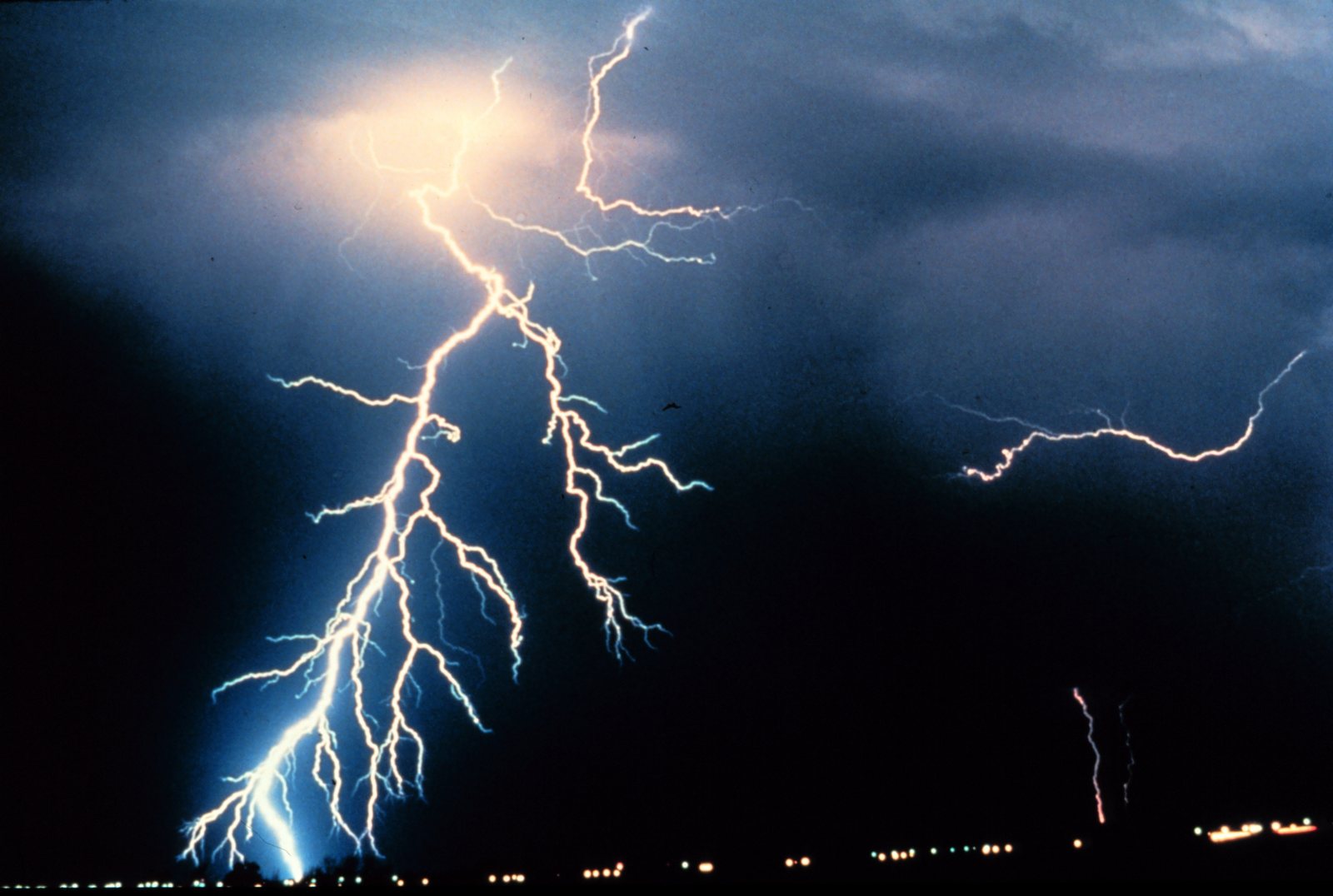
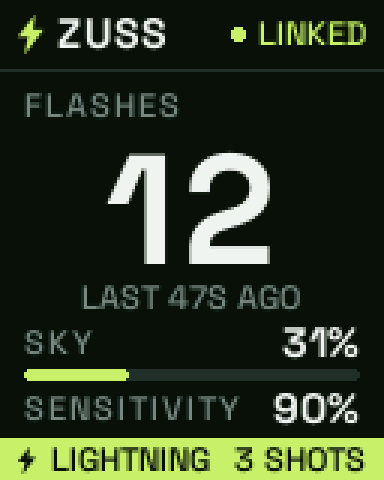
Tune the trigger, then test a flash. This sample monitor mirrors the controls and readouts in the Zuss companion app.
Last flash 47 seconds ago
High sensitivity catches fainter, further flashes.
Fire on each flash
A frame every five seconds
Change exposure over time
Bracket one composition
Every strike, recorded
Custom electronics, firmware and enclosure, designed together.
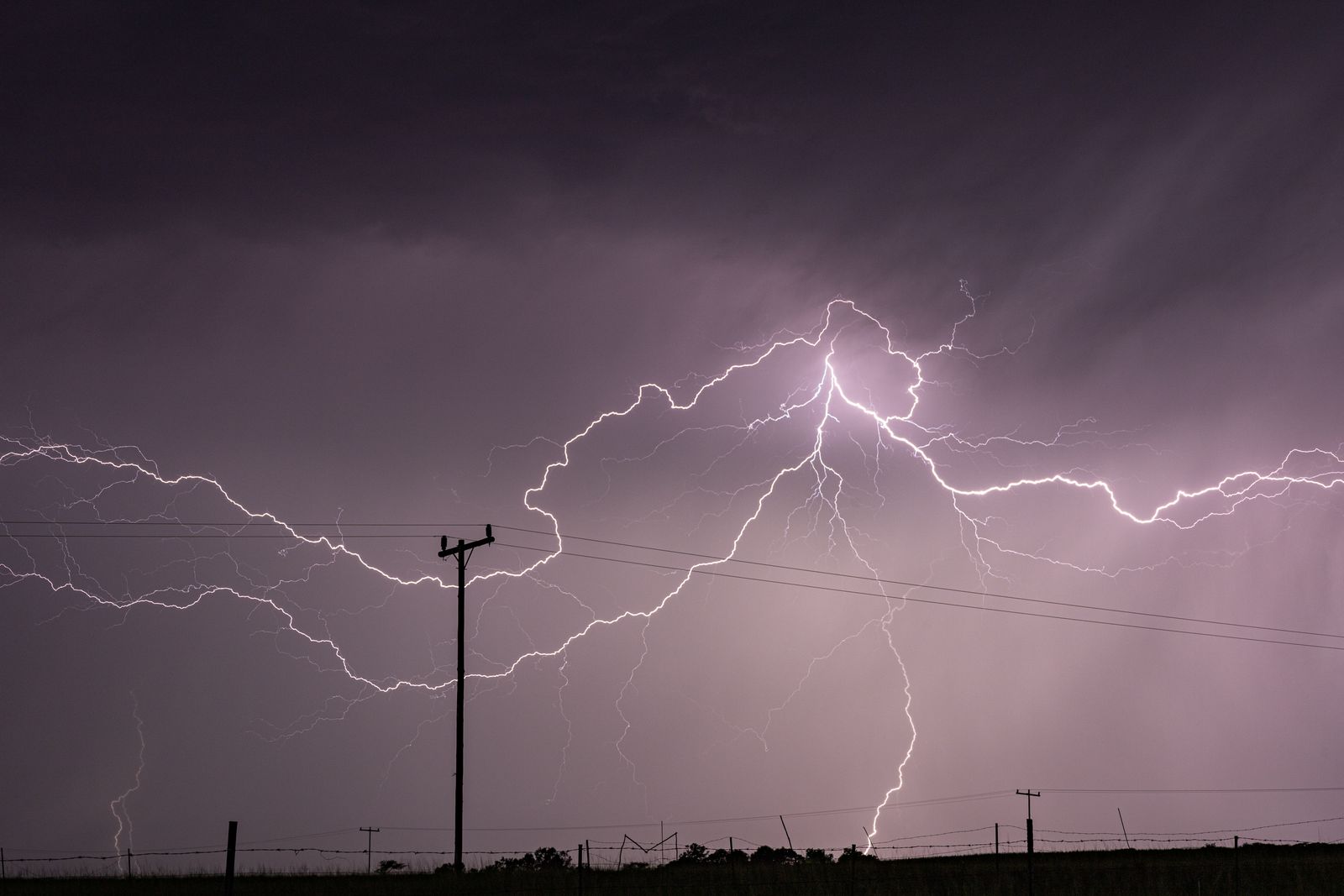
live display for flash count, sky level and camera state
Two optically isolated lines close focus and shutter without sharing a ground with the trigger electronics.
The fit-prototype enclosure uses clear panes and port plugs. It is not certified waterproof.
Ask about Zuss, the app, or the hardware prototype.